With the publication of Refus Global in 1948, Quebec gave Canada its most radical postwar art movement. For Gallery Gevik’s latest exhibitioN we want to highlight a few major Quebec artists that took the that historic rupture in wildly different directions, and whose works still feel urgent 70 years on.
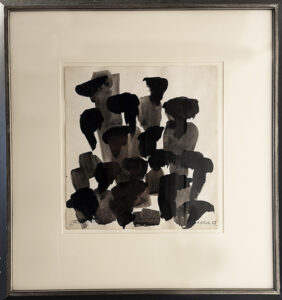
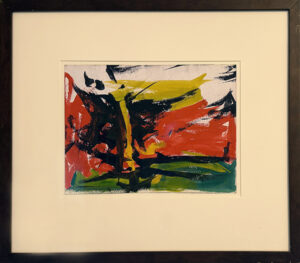
Refus Global is a manifesto that rejected the province’s then conservative culture and declared art free to follow instinct rather than convention. It was one of the great liberating moments in Canadian art history and from that moment, two different currents emerged. Marcelle Ferron, Rita Letendre, Léon Bellefleur and Lise Gervais carried the gestural spirit of Automatisme forward: paint applied with real physical conviction, built up in layers that capture the energy of the hand at work.
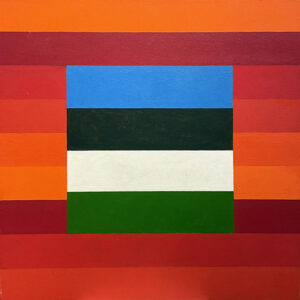
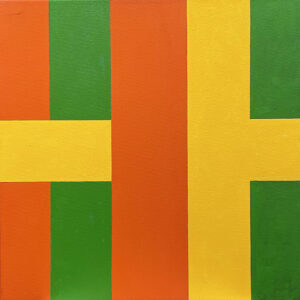
Alongside them, Ulysse Comtois, Marcel Barbeau, and Jean Paul Jérôme represent a cooler, architectural approach: the hard-edge Plasticien sensibility, with its flat fields of saturated colour and disciplined geometry. It’s a wonderful that Barbeau — a signatory of Refus Global — is present in both worlds, having moved from raw gesture toward geometric clarity over his career. His trajectory is the trajectory of Quebec abstraction itself.
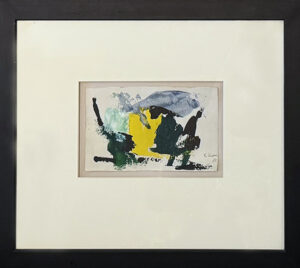
A third pleasure awaits collectors familiar with Henry Wanton Jones‘ celebrated figurative surrealism: rare early abstract paintings that catch him experimenting outside his usual language, in dialogue with the very artists gathered here.
What unites this exhibition is not a single style but a shared commitment by some of Canada’s most significant painters to celebrating freedom on the canvas.